
Central Florida’s Data-Infrastructure Opportunity Is Now a Constraint-Management Problem
Power, water, people, permission, and resilience will determine which projects move from announcement to operation.
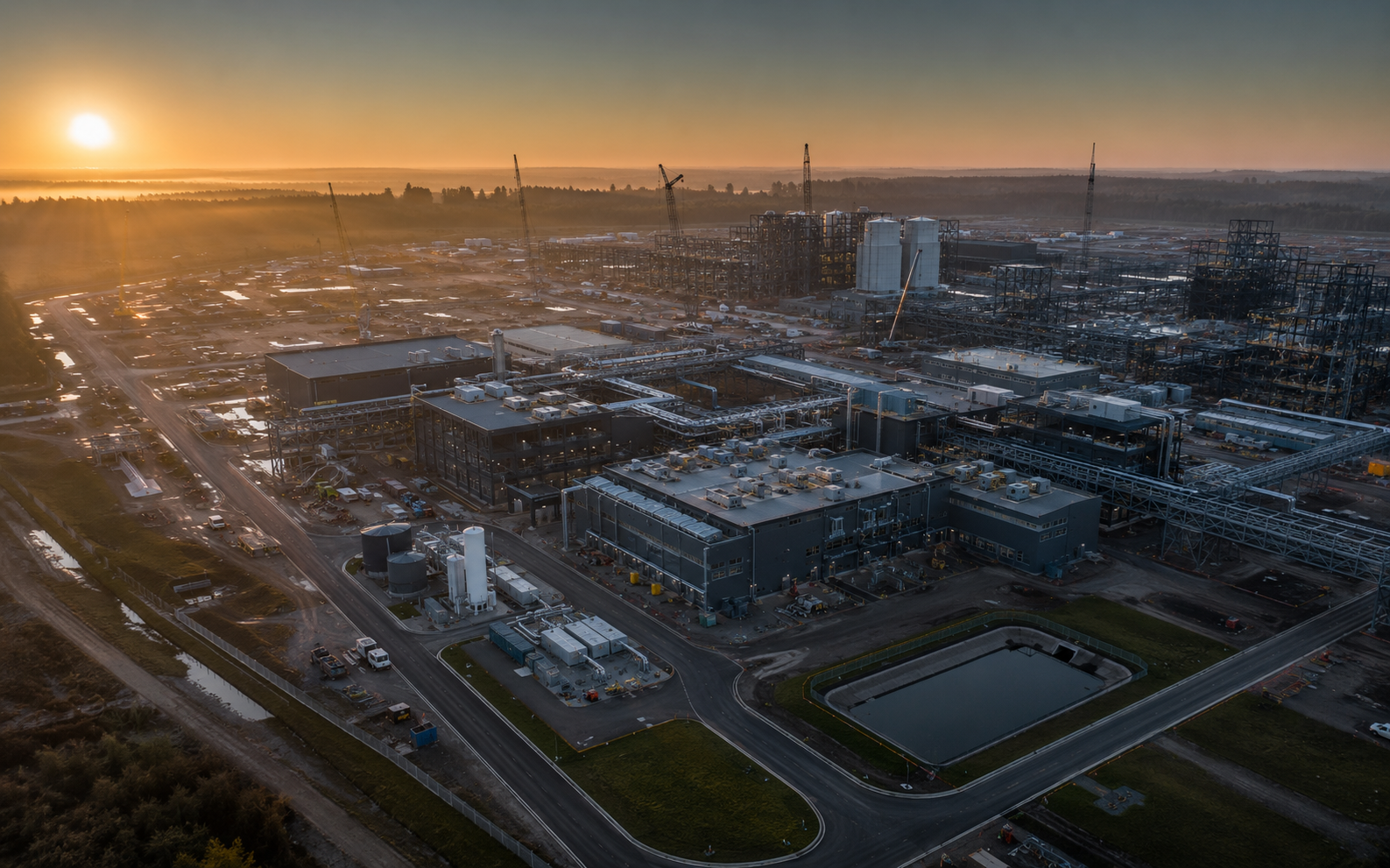
Central Florida has many of the ingredients needed to become a more important market for mission-critical and data infrastructure. The region sits inland from Florida’s coastal concentration, connects naturally to major population and business centers, and can support organizations seeking geographic diversity without leaving the state.
Visible investment is already arriving. HostDime’s new 100,000-square-foot facility in Maitland is designed as a Tier IV data center with more than 1,000 racks, multiple redundant fiber paths, and Category 5 hurricane resistance. The company expects completion in the third quarter of 2026.
The opportunity is real. But demand alone will not determine the outcome.
Central Florida’s ability to capture durable value from data-infrastructure growth will depend on whether developers, utilities, contractors, public agencies, and operators can coordinate five interdependent constraints: power, water, permission, workforce, and resilience.
Each can stop a project. More importantly, each can move during development. A site that appears viable when land is secured may become uneconomic when the power-delivery schedule changes, the cooling strategy encounters water restrictions, specialized labor becomes unavailable, or a local government determines that the community costs are not adequately addressed.
The regional challenge is therefore not simply how to build more data centers. It is how to establish a development and operating system capable of separating viable projects from speculative ones—and resolving the governing constraint before capital, schedules, and public trust are consumed.
A new operating environment
Florida’s regulatory environment changed materially in 2026.
Senate Bill 484, effective July 1, preserves local authority over zoning and land-use decisions involving large-load facilities. It directs utilities to develop service structures intended to ensure that large-load customers bear their own cost of service and associated nonpayment risk. It also creates distinct consumptive-use permitting requirements for large-scale data centers and allows permitting authorities to require some use of reclaimed water.
The law makes an important principle explicit: a project cannot be considered ready merely because a developer controls the land and has a compelling demand forecast.
Readiness now requires credible answers to several connected questions:
- Is sufficient power deliverable at the site, on the required date, under commercially supportable terms?
- Can the cooling design operate within local water conditions and permitting requirements?
- Has the project earned a viable path through zoning, permitting, and community review?
- Are the specialized trades, equipment, and commissioning resources available when the schedule requires them?
- Can the completed facility maintain service through hurricanes, grid events, supply interruptions, and other disruptions?
These are not separate administrative checklists. They form a system. Treating them independently increases the risk that progress in one area conceals a fatal constraint somewhere else.
Power must become the first site-selection gate
For conventional development, teams often begin with land, location, access, and entitlements. For high-load digital infrastructure, deliverable power must sit at the front of the decision.
“Power nearby” is not the same as power available to the project. Available capacity must be connected to a defined energization date, interconnection scope, infrastructure responsibility, tariff structure, and project-load profile.
A credible power-readiness gate should include:
- Utility-validated capacity and delivery milestones
- A phased-load forecast connected to actual customer demand
- Deposits or other commitments that distinguish real demand from speculative queue positions
- Defined responsibility for generation, transmission, substation, and distribution costs
- Curtailment and emergency operating provisions
- Backup-generation, fuel, and restoration assumptions tested against extended outages
This does more than protect the utility and surrounding ratepayers. It protects the developer from advancing land, design, and procurement around a power date that has not been operationally validated.
Water and cooling are strategic design decisions
Cooling strategy can no longer be treated as a downstream mechanical-design choice.
Florida’s new permitting framework elevates water availability, consumptive use, and reclaimed-water options earlier in the development process. The right solution will vary by location, density, climate conditions, capital cost, and operating requirements. Air-cooled, water-cooled, hybrid, and closed-loop approaches all involve different tradeoffs.
The operating mistake would be optimizing only for first cost or theoretical efficiency while ignoring permitting risk, water reliability, lifecycle expense, and community acceptance.
Developers should establish a water-and-cooling budget during site selection. It should define expected consumption, peak conditions, source reliability, reclaimed-water feasibility, discharge requirements, redundancy, and the consequences of future load expansion.
The best cooling design is not simply the one with the most attractive equipment efficiency. It is the one that can be permitted, supplied, maintained, expanded, and defended as a responsible use of local resources.
Community permission is productive capacity
A project may be technically feasible and still be unbuildable.
Across Central Florida, communities are asking more pointed questions about the effect of large data facilities on utility costs, water, land use, noise, generator emissions, tax incentives, and emergency services. Because local governments retain meaningful authority, community acceptance is no longer a public-relations task that begins after opposition emerges. It is part of the development critical path.
A credible community-value case should explain:
- Who pays for the required infrastructure
- How water and power impacts will be managed
- What protections apply to noise, generators, fuel storage, and neighboring land uses
- What employment, tax, connectivity, or resilience benefits the project creates
- How future expansion and eventual decommissioning will be handled
- What performance information will remain visible after approval
The practical solution is to manage community readiness as a formal workstream with an accountable owner, milestones, risks, and decision gates. Public trust cannot guarantee approval, but its absence can become the project’s governing constraint.
Skilled labor is not just a hiring problem
Mission-critical projects compete for electricians, line workers, controls specialists, mechanical technicians, equipment vendors, and commissioning professionals. Nationally, the data-center and power-development surge is intensifying competition for these roles at the same time a significant share of experienced construction workers approaches retirement.
Calling this a labor shortage is accurate but incomplete. Project teams can amplify the shortage through unstable schedules, late design decisions, premature work release, stacking of trades, and shifting priorities. Those conditions consume scarce capacity without increasing throughput.
A better response combines market and operating measures:
- Reserve constrained contractor capacity earlier
- Build regional apprenticeship and technical-training partnerships
- Involve commissioning teams before installation is substantially complete
- Use prefabrication and standardized assemblies where they reduce field variability
- Track specialized labor across the portfolio rather than project by project
- Protect constrained crews from avoidable resequencing and incomplete work fronts
The goal is not maximum activity everywhere. It is reliable flow through the trades and decisions that control completion.
Hurricane resilience extends beyond the building
Central Florida’s inland position can provide geographic diversification from coastal markets, but it does not eliminate severe-weather risk.
Resilience is often expressed through wind ratings, redundant mechanical and electrical systems, generators, and fuel storage. Those are essential, but operational continuity also depends on factors outside the facility: utility restoration priorities, fuel replenishment, road access, staffing, communications, supplier availability, and the condition of upstream network infrastructure.
A resilient facility must therefore be commissioned as part of a wider operating network. Scenario testing should include extended grid loss, constrained fuel delivery, simultaneous regional outages, limited staffing, communications failure, and delayed replacement equipment—not only the loss of a single component under normal conditions.
Redundancy installed is not the same as resilience proven.
A regional constraint-readiness model
Central Florida does not need to choose between digital-infrastructure investment and protection of communities. It needs a better method for determining which projects are genuinely ready and how their risks will be managed.
Before a project receives full capital commitment, leadership should establish five readiness gates:
| Gate | Evidence required |
|---|---|
| Power | Deliverable capacity, commercial terms, infrastructure scope, and energization milestones |
| Water and cooling | Permittable design, reliable source, lifecycle consumption, and expansion assumptions |
| Permission | Viable zoning and entitlement path, community-impact response, and accountable stakeholder plan |
| Workforce and supply chain | Resource-loaded trade plan, constrained-equipment strategy, and commissioning capacity |
| Resilience | Tested continuity scenarios covering the facility and its external dependencies |
The gates should be reviewed together. When one fails, the response should not be to push every workstream harder. Leadership should identify the governing constraint, determine what must change, and protect the rest of the system from advancing on assumptions that are no longer valid.
The companies that will win
Central Florida’s digital-infrastructure future will not be determined solely by who announces the largest campus or secures land first.
The advantage will belong to organizations that can turn fragmented development activity into coordinated execution—organizations that validate power before promising schedules, address water before finalizing cooling, earn permission before opposition hardens, protect constrained talent from instability, and prove resilience across the complete operating network.
The region has an opportunity to become an important and differentiated infrastructure market. Capturing that opportunity responsibly will require more than capital and technology.
It will require operating discipline.